
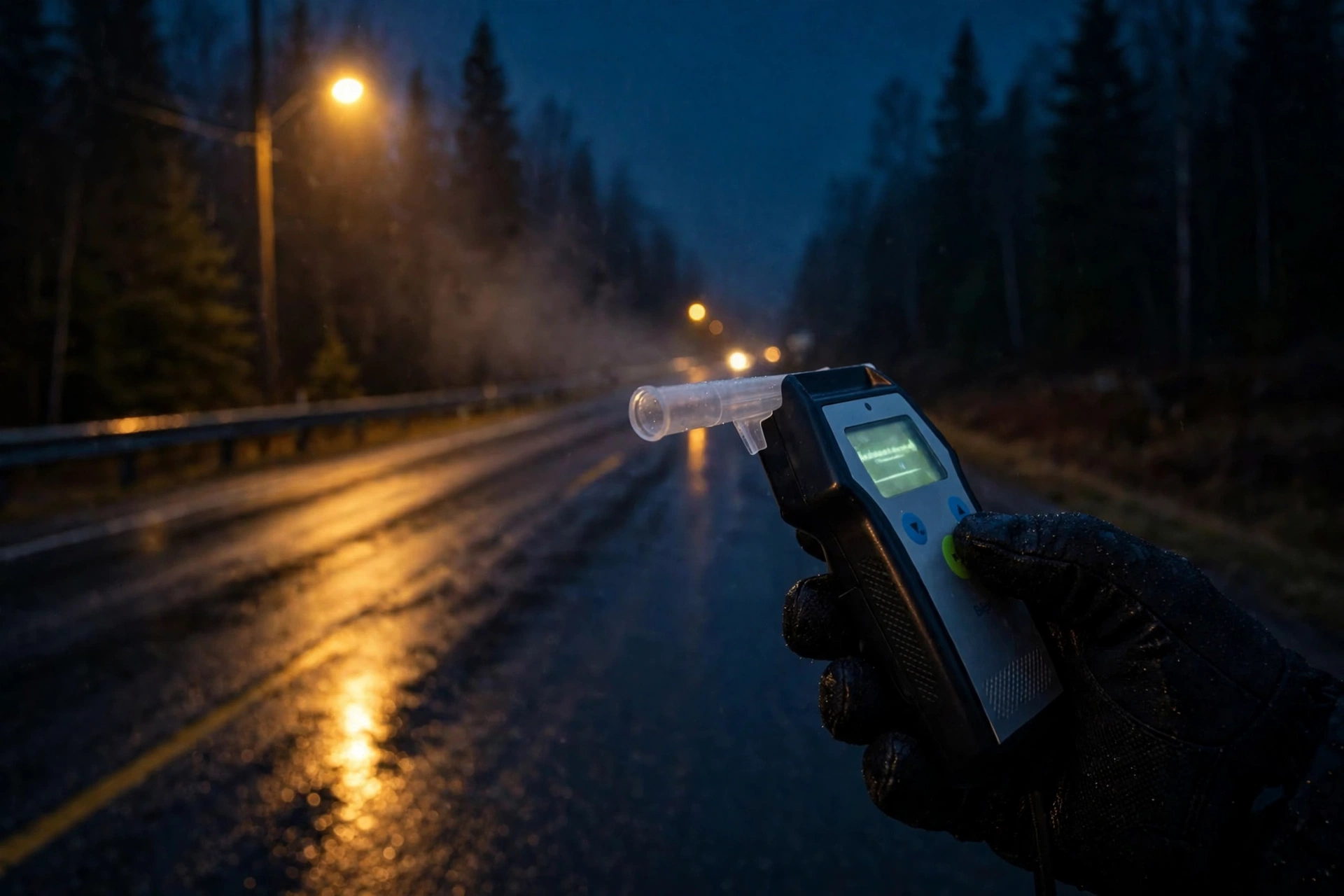
Over 80 is the charge most people mean when they say DUI. It does not need proof that your driving looked impaired. It needs a blood alcohol reading of 80 milligrams of alcohol in 100 millilitres of blood or more, within two hours after you stopped driving. That is Criminal Code s.320.14(1)(b).
The two-hour rule
The reading that matters is the one within two hours after you stopped driving, not only the reading at the wheel. The Code has a narrow exception for drinking after you stopped driving, under s.320.14(5) to (7): it applies only if you had no reasonable expectation of being asked for a sample, and, for alcohol, the drinking is consistent with the measured reading and with having been under the limit while driving. It is a narrow exception, not a general defence.
The penalties on conviction
A first offence carries a minimum $1,000 fine. That rises to $1,500 if the reading was 120 to 159 mg, and $2,000 if it was 160 mg or more. A second offence carries a minimum 30 days in jail, and a third carries a minimum 120 days. The court also imposes a driving prohibition of 1 to 3 years on a first offence, 2 to 10 years on a second, and at least 3 years on a third. On top of that, Ontario suspends the licence for at least 1 year on a first conviction, with Back on Track and ignition interlock before reinstatement.
The 90-day suspension starts at the roadside
A reading of 0.08 or more brings an immediate 90-day administrative licence suspension, a 7-day vehicle impoundment, and a $550 penalty. That happens at the roadside, before any court date, and it applies even if the criminal charge is later withdrawn.
What gets checked in a case like this
The demand has to have been lawful, the stop has to have been lawful, and the breath samples have to have been taken into an approved instrument by a qualified technician, with the calibration and system checks the law requires. Whether any of that helps in a particular case depends on the disclosure, and no outcome can be promised.
What to do now
Do not plead guilty at your first appearance before the disclosure has been reviewed. Keep your release papers, your court date, and your suspension notice together, and get advice before the 90-day Stream A and Stream D clocks run down. Call (416) 960-0781 for a free, confidential consultation, or book one online.
This is general information, not legal advice. Current as of November 2026.
Leave a Reply